
For U.S. construction companies, metal is no longer just another line item in the estimate. Steel, aluminum, and fabricated metal components now sit at the center of project cost control, schedule reliability, and procurement risk. Recent market data reinforces the pressure. The Producer Price Index for metals and metal products rose steadily through 2025, with the index moving from 306.869 in January 2025 to 353.258 in December 2025, followed by preliminary increases into early 2026.
Steel mill products also showed continued upward movement in early 2026. In the construction sector specifically, the Associated General Contractors of America reported that producer price indexes for aluminum mill shapes and steel mill products increased sharply year over year, citing aluminum mill shapes up 33.0% and steel mill products up 20.7%. For contractors, fabricators, and construction procurement teams, the message is direct: managing metal sourcing more precisely is now a competitive advantage.
Metal Volatility Is a Project Risk
Construction companies are under pressure to deliver on tighter schedules while controlling costs that can shift between bid date, purchase order, fabrication, and installation. When material dimensions, finishes, or processing requirements are not aligned early, the result can be avoidable waste, added handling, longer lead times, and more supplier coordination.
This is where a metals partner with processing depth can change the procurement equation.
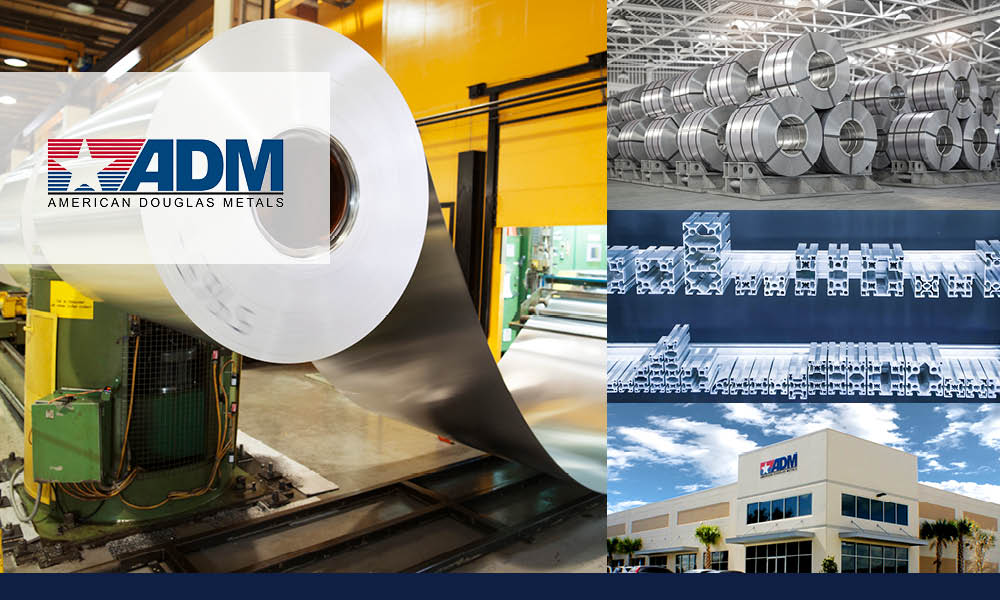
American Douglas Metals supplies flat-rolled aluminum and steel products that can be customized, formatted, processed, warehoused, and shipped to project requirements. ADM’s service capabilities include slitting, cut-to-length, blanking, embossing, shearing, CNC machining, processing, fabrication, assembly, warehousing, and distribution.
The Case for Buying Closer to Finished Specification
For construction applications, value is not only in the metal itself. It is in receiving material that is closer to the dimensions, surface requirements, and jobsite or fabrication sequence needed. ADM’s slitting services produce custom-width aluminum and steel coils. The process cuts coil material to specified widths, then measures and checks the material for quality assurance before recoiling and packaging for shipment. ADM identifies slitting as a way to reduce scrap metal, reduce labor costs, create a consistent end product, and streamline material flow. For construction companies, this can support practical field and shop outcomes:
- Fewer unnecessary cuts before fabrication
- More consistent component sizing
- Reduced handling of oversized material
- Better alignment between procurement, fabrication, and installation schedules
Material Selection Matters in Harsh Environments
Construction projects frequently expose metal components to moisture, weather, temperature variation, and wear. Finish selection can affect long-term performance and maintenance requirements. ADM’s flat-rolled steel offering includes cold rolled, galvanized, galvannealed, galvalume, acrylume, painted, embossed, and hot-rolled pickled and oiled options. ADM’s flat-rolled steel can be galvanized and zinc-coated for added protection, Galvalume is a zinc, aluminum, and silicon coating for protection from oxidation, and painted finishes are suitable for indoor and outdoor exposure while allowing forming and fabrication.
For construction buyers, that means material discussions should happen before the purchase order is finalized. The right finish can affect corrosion resistance, paint adhesion, welding needs, slip resistance, and exterior durability.
Embossed Metals Add Function, Not Just Appearance
Embossing is often viewed as an aesthetic process, but in construction it can serve practical purposes. ADM’s embossing can be used to create patterns on metal floors to support slip resistance, disperse liquid more effectively, reduce friction, and increase surface area for heat-transfer applications. ADM’s embossed products have been used in construction, automotive, manufacturing, medical, and agricultural fields.
That makes embossed aluminum or steel relevant for stairs, platforms, panels, walkways, garage doors, equipment areas, and other construction-adjacent applications where form and function need to work together.
A Stronger Procurement Model for Construction
As metal prices move and construction schedules remain demanding, contractors need more than quote responsiveness. They need a supply partner that can help reduce uncertainty across the material lifecycle.
ADM is a third-generation, family-owned and operated organization with more than 43 years of experience, metal processing facilities, warehousing centers, and sales offices across more than 11 cities throughout the East Coast and Canada. This operating footprint matters for construction companies that need reliable sourcing, custom processing, and shipment coordination across multiple jobs or regions.
What Construction Companies Should Ask Before Their Next Metals Order
Before sourcing steel or aluminum for a project, procurement and operations teams should ask:
- Can this material be slit, cut-to-length, blanked, or sheared before delivery?
- Which finish is best suited for the project environment?
- Can the supplier warehouse and ship direct to the required location?
- Are drawings, blueprints, spec sheets, or AutoCAD files being used to align fabrication requirements?
- Can the supplier reduce the number of handoffs between sourcing, processing, finishing, and delivery?
ADM’s customers can upload specifications such as blueprints, spec sheets, and AutoCAD drawings, and that ADM can customize finishes, shapes, and sizes to project requirements.
Conclusion: Precision Metals Procurement Is Now a Cost-Control Strategy
For U.S. construction companies, the metals market demands a more disciplined sourcing strategy. Price volatility may be outside a contractor’s control, but material planning, supplier selection, processing precision, and finish alignment are not. By working with a full-service metals partner such as American Douglas Metals, construction companies can source aluminum and steel products closer to final specification, reduce unnecessary handling, support more consistent fabrication, and improve material flow from purchase order to jobsite.
To discuss flat-rolled steel, aluminum, slitting, cut-to-length, blanking, embossing, shearing, or custom metal processing requirements, contact American Douglas Metals.