
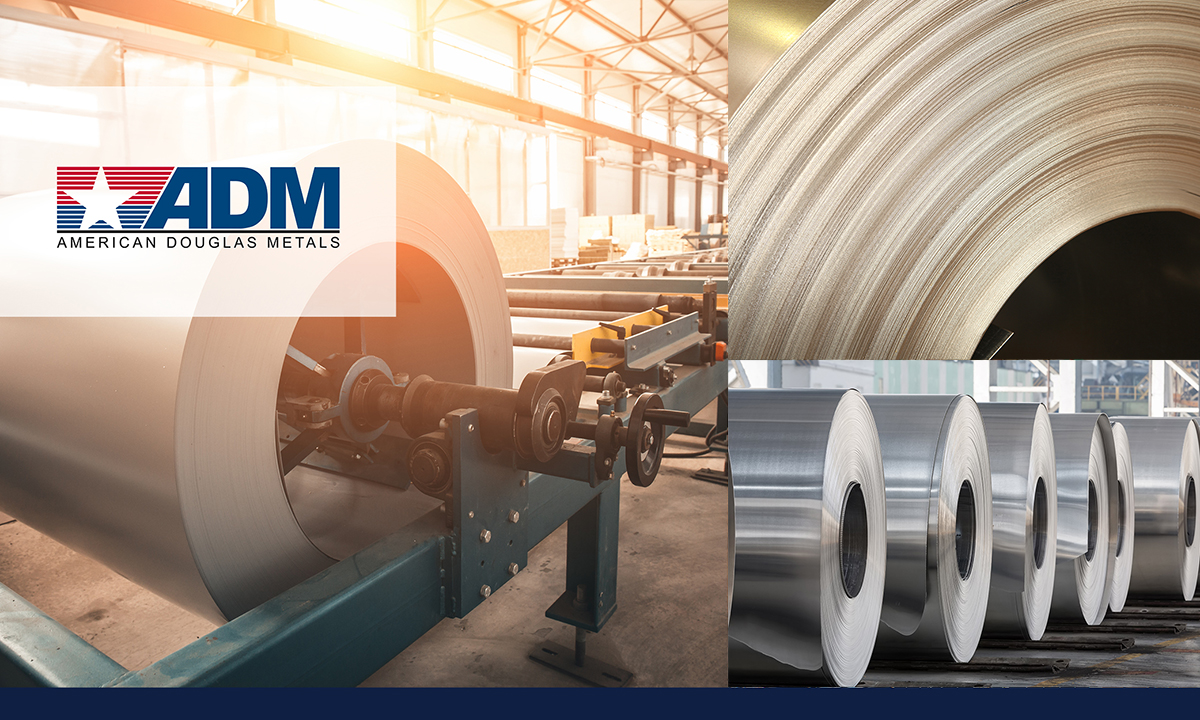
For manufacturers, fabricators, and procurement teams, choosing the right metal is only part of the sourcing decision. The format in which that material arrives also affects production flow, storage, handling, labor efficiency, and downstream fabrication. Two of the most common formats used across industrial operations are slit coil and sheet metal. While both originate from flat-rolled metal, they support different production requirements and manufacturing workflows.
American Douglas Metals supplies flat-rolled aluminum and steel products in multiple formats, with custom processing capabilities including slitting, cut-to-length, blanking, shearing, and related value-added services. These capabilities help align incoming material with project requirements and production needs.
Understanding the differences between slit coil and sheet metal can help operations leaders make better decisions about material flow, fabrication readiness, and manufacturing efficiency.
What Is Slit Coil?
Slit coil is created when a master coil is processed through a slitting line and cut into narrower widths using slitting knives. The material remains in coil form after processing, making it well suited for continuous production environments and downstream fabrication. Slitting supports custom-width aluminum and steel coils for a wide range of industries and applications.
ADM’s slitting capabilities include:
- 40”, 50”, 52”, and 62” slitters
- slit widths from .750” to 62”
- gauge range from .0065” to .156”, depending on material
- maximum coil weights up to 46,000 lbs.
- beveled knives
- inline packaging lines
- looping pits
- PVC application and removal
Because the finished product remains coiled, slit coil is often used in roll-fed and continuous production environments.
What Is Sheet Metal?
Sheet metal refers to flat pieces cut from coil stock and prepared in sheet or blank form for fabrication, assembly, or secondary processing. Cut-to-length processing converts flat-rolled coils into custom-sized sheets, while blanking produces smaller sheets through cut-to-length processing and/or shearing.
ADM’s aluminum cut-to-length capabilities include:
- 48” wide CTL
- 60” wide CTL
- gauge range from .013” to .125”
- coil widths from 20” to 60”
- cut lengths from 20” to 192”
- 25,000 lb. maximum coils
- mechanical stackers
- PVC application
- paper interleaving
Carbon steel sheets and blanks are also available in custom sizes and formats to meet exact project specifications.
Unlike slit coil, sheet metal is delivered as discrete flat pieces, making it easier to stage, stack, move, and introduce into fabrication processes that do not rely on coil-fed production.
The Main Difference Between Slit Coil and Sheet Metal
The core difference is simple:
- Slit coil is narrow-width metal that remains wound in coil form.
- Sheet metal is flat metal delivered in individual sheets or blanks.
That difference influences how material is stored, handled, fed into equipment, and used in production.
When Slit Coil Makes More Sense
Slit coil is often the better choice for operations that run continuous, roll-fed, or automated production lines. Because the material stays in coil form, it can move directly into downstream equipment without first being cut into individual sheets.
Slitting helps:
- reduce scrap metal
- reduce labor costs
- create a consistent end product
- streamline material flow
These advantages make slit coil especially practical when a manufacturer needs repeatable narrow widths and wants to minimize internal conversion steps before forming or fabrication begins.
Common applications include:
- HVAC ducts
- lighting fixtures
- architectural trims
- roof drain pipes
Slit coil is often the better fit when:
- production uses roll-fed equipment
- material runs continuously through forming or fabrication lines
- narrow custom widths are required
- the operation wants to minimize extra cutting before use
- material flow and repeatability are priorities
When Sheet Metal Makes More Sense
Sheet metal is often the better fit for operations that work with individual pieces rather than continuous strip. Flat sheets are easier to stack, stage, inspect, and move through work cells where the material will be punched, bent, welded, machined, assembled, or manually loaded into fabrication equipment.
Custom-sized sheets and blanks support manufacturers that need material prepared in defined dimensions rather than coil form.
Sheet metal is often the better fit when:
- fabrication starts with individual flat pieces
- the operation uses press brakes, shears, stamping, or assembly stations
- stacked and palletized material is easier to manage than coiled stock
- exact sheet or blank dimensions are required
- downstream handling favors sheets over coils
For many fabrication-driven environments, sheet metal reduces the need for coil handling equipment and simplifies how material is introduced to the floor.
Storage and Handling Considerations
The choice between slit coil and sheet metal also affects internal logistics. Coils and sheets require different approaches to storage, transportation, and shop floor movement.
Slit coil can be highly efficient from a material utilization standpoint, especially in continuous operations. However, it may require specialized coil handling equipment and a workflow designed around unwinding and feeding strip material into downstream machinery.
Sheet metal is often easier to organize in stacked formats, especially for shops working in smaller production batches or moving material manually between fabrication stations. Because the metal is already flat and sectioned, it can reduce the need for internal coil conversion before production begins.
Production Efficiency and Labor Impact
Material format can directly influence labor efficiency. When metal arrives in a form that aligns with how it will be used, operations can reduce extra handling, repositioning, and prep work before production starts.
Slitting supports lower labor demands and more efficient material flow, while sheet and blank formats provide custom-sized material aligned with exact project requirements. In both cases, the operational advantage comes from receiving metal closer to the shape, width, or format the production line actually needs.
For procurement and operations teams, the most cost-effective format is often the one that reduces unnecessary internal processing.
Material Type and Finish Still Matter
Even when the main decision is format, material type and finish remain important. Available flat-rolled steel finishes include cold-rolled, galvanized, galvannealed, galvalume, acrylume, painted, embossed, and hot-rolled pickled and oiled. Aluminum products are available in formats and finishes such as mill finish, painted, embossed, anodized, and multiple alloy series.
That means the choice is often not just slit coil versus sheet metal. It is also:
- which metal
- which finish
- which dimensions
- which downstream processing path
Questions to Ask Before Choosing
To determine whether slit coil or sheet metal is the better fit, procurement and operations teams should ask a few practical questions.
- How does the production line consume material?
If the line uses continuous strip, slit coil is often the logical choice. If the process starts with individual flat pieces, sheet metal is usually the better fit.
- Is width or part-ready format the bigger priority?
Slitting is centered on custom widths. Cut-to-length and blanking are centered on ready-to-use flat pieces.
- What handling equipment is already in place?
Operations built for coil handling may benefit more from slit material. Shops organized around flat stock storage and movement may prefer sheets.
- How much internal conversion should be eliminated?
The more work completed upstream, the less handling and resizing may be required at the plant.
- What does the next production step require?
The right format should support the next manufacturing action, whether that is roll forming, stamping, bending, shearing, assembly, or shipment to another stage of production.
Conclusion
Slit coil and sheet metal each serve a different operational purpose. Slit coil makes sense when production depends on narrow-width material in continuous coil form. Sheet metal makes more sense when fabrication starts with individual flat pieces that are easier to stage, move, and process at the work-cell level.
The right format depends on how the material will be handled, what the equipment requires, and where the operation wants to reduce friction between material receipt and production use. For procurement leaders and manufacturing teams, the goal is not simply to buy metal. It is to source it in the form that makes the most sense for the operation.
ADM’s capabilities in slitting, cut-to-length, blanking, shearing, and broader value-added processing help customers source flat-rolled aluminum and steel in formats better matched to real production needs.