
Selecting the right flat-rolled steel finish is an important decision for manufacturers, fabricators, and procurement teams. Finish selection affects more than appearance. It can influence corrosion resistance, paint performance, weldability, durability, downstream fabrication, and how well the material performs in its end-use environment. For companies sourcing steel for industrial and manufacturing applications, choosing the right finish is a practical specification decision that can affect both product quality and operational efficiency.
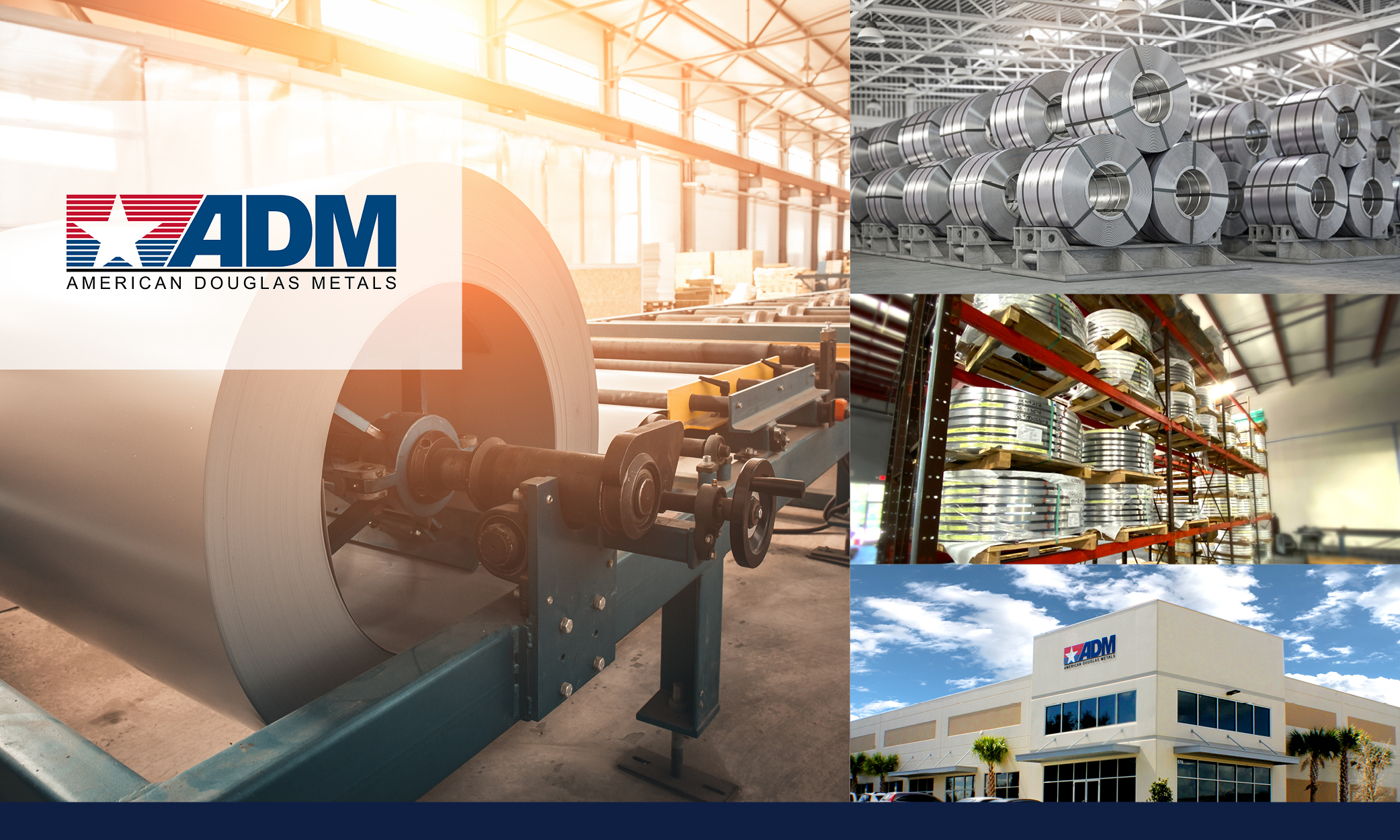
American Douglas Metals (ADM) supplies flat-rolled steel products in multiple formats and finishes and positions its service model around delivering material that can be slit, cut-to-length, or sheared to meet manufacturing requirements. ADM’s flat-rolled steel inventory includes cold-rolled, galvanized, galvannealed, galvalume, acrylume, painted, embossed, and hot-rolled pickled and oiled products.
Understanding how these finishes differ can help buyers align steel selection with performance demands, fabrication requirements, and project conditions.
Why Steel Finish Selection Matters
Different steel finishes are designed to support different operating environments and production goals. Some are chosen for corrosion protection. Others are selected because they support welding, paint adhesion, formability, or surface appearance. The right finish depends on how the material will be used, what environmental exposure it will face, and what downstream processes it must go through before becoming a finished product.
ADM’s steel literature emphasizes that its inventory can be custom-sized and formatted to suit exact project specifications, which reinforces the importance of matching finish selection to application needs rather than defaulting to standard stock.
Cold-Rolled Steel
Cold-rolled steel is processed similarly to hot-rolled steel but includes an added step to achieve a more exact dimension on the steel finish. ADM states that after the steel cools down, it is run through the rolling mill again to modify the surface area. According to ADM, cold rolling creates a product best suited for projects that require smooth surfaces, well-defined edges, and corners, such as domestic appliances.
When to choose cold-rolled steel
Cold-rolled steel is a strong fit when the application requires:
- smoother surface appearance
- tighter dimensional consistency
- clean edges and corners
- a finish suited for visible or precision-oriented parts
For buyers evaluating finish options, cold-rolled steel is often appropriate when surface quality and exact dimensions matter more than raw mill-scale characteristics.
Galvanized Steel
ADM describes galvanized steel as steel coated with zinc to provide added protection and help prevent rusting. The zinc acts as a barrier to protect the base metal and create a long-lasting steel product. ADM also notes that galvanized steel is one of the more popular finished products because of its extended durability.
When to choose galvanized steel
Galvanized steel is often well suited for:
- applications requiring corrosion protection
- environments where moisture exposure is a concern
- projects that need a durable protective finish
- general manufacturing uses where service life is a key factor
For many industrial buyers, galvanized steel is a practical choice when corrosion resistance is a priority and the material must perform reliably in demanding environments.
Galvannealed Steel
ADM states that galvannealed steel is produced through the combination of the annealing process and hot-dip galvanizing. The finish creates a dull matte surface that allows for paint adhesion and welding as needed. ADM’s description makes galvannealed especially relevant for applications where downstream finishing and fabrication processes are part of the production plan.
When to choose galvannealed steel
Galvannealed steel is often the right fit when the application requires:
- improved paint adhesion
- welding capability
- corrosion protection with a more fabrication-friendly surface
- a matte finish rather than a brighter metallic appearance
For teams comparing galvanized and galvannealed options, galvannealed may be the better choice when the steel will be painted or welded later in the process.
Galvalume Steel
ADM describes galvalume as a coating made from zinc, aluminum, and silicon to protect steel from oxidation. ADM also states that galvalume offers an advantage over other galvanized materials because of its enhanced protection from rust when exposed to water and other liquids. In its flat-rolled steel literature, ADM further notes that galvalume performs well in outdoor environments and can hold up against snow, ice, and rain.
When to choose galvalume steel
Galvalume is often a strong option for:
- outdoor applications
- projects exposed to water or weather
- environments where oxidation resistance is important
- applications needing enhanced corrosion performance
For buyers sourcing steel for exterior or weather-exposed uses, galvalume may provide a more suitable protective finish than standard galvanized material depending on the application.
Acrylume Steel
ADM explains that acrylume adds more protection to galvalume steel products. It is described as a clear organic resin that is roll coated onto the metal surface to create an acrylic layer for corrosion resistance.
When to choose acrylume steel
Acrylume may be the right fit when the application calls for:
- an additional layer of surface protection
- enhanced corrosion resistance beyond standard galvalume
- a finish appropriate for demanding environmental exposure
For procurement teams balancing finish performance and service conditions, acrylume is worth evaluating when extra protection is needed on top of a coated steel product.
Painted Steel
ADM states that painted finishes offer extreme durability in both outdoor and indoor exposure because of its high-quality paint system. ADM also notes that pre-painted metal sheet finishes provide a hard, abrasive-resistant coating while still allowing the flexibility needed for extensive forming and fabricating on the metal surface.
When to choose painted steel
Painted steel is often appropriate for:
- projects with visible finished surfaces
- applications requiring color or appearance control
- environments where both durability and presentation matter
- fabricated parts that still need flexibility during forming
For applications where aesthetics and surface durability are both important, painted steel can provide a finish that supports both function and appearance.
Embossed Steel
ADM describes embossing as a marking process that leaves raised designs on metal through rollers or dies combined with pressure. The company notes that embossed steel is useful for slip-resistant platforms, stairs, and custom-designed steel and metal products. ADM also states that embossing can support functionality by helping disperse liquid more effectively, reduce friction, and increase surface area for heat transfer applications.
When to choose embossed steel
Embossed steel is often selected for:
- slip-resistant surfaces
- decorative or patterned applications
- projects needing added surface functionality
- products where texture improves use or performance
This makes embossed steel a strong option when the project requires more than a smooth flat surface and when patterning serves a specific functional or design purpose.
Hot-Rolled Pickled and Oiled Steel
ADM explains that pickled and oiled steel is a surface treatment used to remove impurities such as rust and carbon scale from hot-rolled steel parts. In ADM’s flat-rolled steel literature, the steel is described as being dipped in pickle liquor containing hydrochloric acid solution, followed by an oiling process that helps prevent flash rust while the material waits for further fabrication.
When to choose hot-rolled pickled and oiled steel
This finish is often a good fit for:
- applications that need cleaner hot-rolled surfaces
- projects moving into further fabrication
- users wanting reduced surface impurities before processing
- production environments that need interim rust protection before next-step manufacturing
For manufacturers who need the mechanical benefits of hot-rolled steel but want a cleaner, more fabrication-ready surface, pickled and oiled material can be a practical option.
How to Evaluate the Right Finish for Your Application
Choosing the right finish starts with the intended use of the material. Procurement and operations teams should evaluate several practical factors before making a decision.
- Environmental Exposure
Will the steel be used indoors or outdoors? Will it be exposed to water, humidity, or corrosive conditions? Coated products such as galvanized, galvalume, and acrylume may be more appropriate when corrosion resistance is a key requirement.
- Downstream Fabrication Requirements
Will the material be painted, welded, formed, or embossed? ADM specifically notes that galvannealed supports paint adhesion and welding, while painted finishes are designed to remain flexible during forming and fabricating.
- Surface Appearance
Does the part require a smooth surface, a matte surface, a textured pattern, or a pre-finished appearance? Cold-rolled, galvannealed, painted, and embossed materials all offer different surface characteristics that can influence both function and presentation.
- Product Performance Expectations
Some projects prioritize visual quality. Others prioritize long-term durability, weather resistance, slip resistance, or fabrication efficiency. Finish selection should support the real operating demands of the end product.
- Processing Needs
ADM positions itself as a supplier that can slit, cut-to-length, or shear flat-rolled steel to customer requirements. That means finish selection should also be considered alongside material format, dimensions, and how the steel will be introduced into the production line.
Why Partnering with a Full-Service Supplier Matters
Finish selection is easier when the supplier can support both material choice and downstream processing requirements. ADM describes itself as a premier metal service center providing processing, fabrication, assembly, warehousing, and distribution for the U.S. manufacturing sector. The company also notes that it carries a wide range of flat-rolled steel products and can customize material to suit exact project specifications.
For buyers, this matters because finish selection is rarely isolated from other considerations. The right choice often depends on how the steel will be processed, shipped, stored, and used in production.
Conclusion
Choosing the right flat-rolled steel finish requires a clear understanding of the application, environment, and fabrication process. Cold-rolled steel supports smooth surfaces and dimensional precision. Galvanized provides a zinc barrier for corrosion resistance. Galvannealed supports paint adhesion and welding. Galvalume and acrylume provide additional protection for demanding environments. Painted steel combines durability with finished appearance. Embossed steel adds texture and functionality. Hot-rolled pickled and oiled steel offers a cleaner hot-rolled surface ready for further processing.
For manufacturers and procurement teams, the best finish is the one that aligns material performance with the actual needs of the project. ADM’s range of flat-rolled steel finishes and value-added processing capabilities position the company to support specification-driven sourcing decisions across a broad set of industrial applications.