
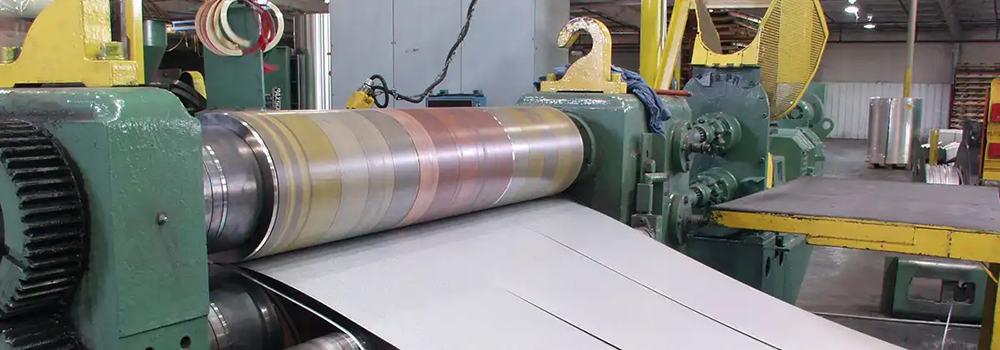
Choosing between cut-to-length processing and slitting can significantly impact production efficiency, material costs, and project timelines. Both methods transform wide metal coils into usable materials, yet they serve distinctly different purposes. Cut-to-length processing lines produce flat sheets of predetermined dimensions, while slitting creates narrower strips or rolls of precise widths. Understanding what cut to length means and how coil processing lines operate is essential for manufacturers across industries such as automotive, construction, packaging, and electronics. This guide examines the key differences between these metal fabrication methods, explores real-world applications for cut-to-length steel processing and cut-to-length aluminum sheets, and provides a framework for selecting the right cut-to-length services for specific project requirements.
Understanding Cut-to-Length Processing and Slitting
What is Cut-to-Length Processing
Cut-to-length processing transforms metal coils into flat sheets of predetermined dimensions through an automated sequence. The process begins when coils arrive at the production line and move through specialized equipment designed to uncoil, flatten, measure, and shear the material. A typical cut-to-length processing line consists of an uncoiler that gradually unwinds the coil, a leveler that applies intense pressure to remove curvature and imperfections, a feeder mechanism that advances the material, a shear unit that cuts sheets to specified lengths, and a stacker that organizes finished products. This equipment configuration handles various materials including cold-rolled and hot-rolled carbon steel, silicon steel, tinplate, stainless steel, and surface-coated metals.
What is Slitting
Slitting divides wide master coils into narrower strips through continuous cutting with circular rotary knives. The operation feeds coiled metal lengthwise through a slitter head containing two parallel arbors mounted with customized rotary knives and rubber stripper rings. These circular blades rotate at optimized speeds to shear through steel, stainless steel, aluminum, and various alloys as material passes between upper and lower knife pairs. Rubber rings pull the material through the arbors while knives penetrate the metal, causing it to fracture along designated lines. Each narrower coil produced is called a mult, and these can be customized to specific widths and weights based on project requirements. Harder materials require less knife penetration, while softer metals need deeper cuts before the material breaks cleanly.
How Coil Processing Lines Work
Both methods follow distinct workflows suited to their output formats. Cut-to-length processing lines move material through uncoiling, leveling, feeding, cutting, and stacking stages. The leveling step proves particularly significant as it removes the bend caused by coil storage and creates uniform thickness across sheets.
In similar fashion, slitting lines operate through a three-stage sequence. The uncoiler loads the master coil onto an expandable mandrel that grips the inside diameter, allowing the coil to rotate as material feeds into edge guides. After that, the slitter head with precision-spaced knives cuts the material into multiple strips simultaneously. The recoiler then wraps each slit strip back into coil form for packaging and shipment. Tension control systems maintain uniform pressure throughout slitting to prevent material deformation, whereas cut-to-length operations prioritize leveling technology for flatness.
Key Differences Between Cut-to-Length and Slitting Methods
The most fundamental distinction between these fabrication methods lies in their final output format. Cut-to-length processing lines deliver flat sheets stacked and ready for immediate use, whereas slitting systems produce narrow strip coils that remain wound for continuous processing. This difference shapes every downstream operation, from material handling protocols to storage configurations.
Output Format: Flat Sheets vs. Narrow Coils
Cut-to-length operations perform transverse cuts across the width of coiled material, creating individual sheets with controlled length dimensions. Slitting lines execute longitudinal cuts along the coil length, dividing master coils into multiple narrower strips that maintain their coiled form. Each slit strip, called a mult, gets rewound into smaller coils for transport to stamping operations, tube production, or roll forming applications.
Processing Speed and Production Volume
Slitting lines operate at significantly higher speeds, often exceeding 300 meters per minute, making them suitable for high-volume production environments where minimizing downtime drives profitability. Cut-to-length processing runs at slower speeds due to leveling and shearing sequences that demand precise timing and coordination. The speed differential reflects different production priorities: slitting emphasizes strip efficiency and throughput, while cut-to-length operations prioritize sheet quality and dimensional consistency.
Material Handling and Storage Requirements
Cut-to-length machines require more floor space to accommodate leveling systems and stacking equipment. Slit coils prove more space-efficient during storage and transport compared to flat sheets, which need careful organization due to varied lengths. The inventory footprint difference affects how manufacturers manage supply chains and warehouse capacity. Slitting also allows smaller batch sizes since equipment configurations switch quickly between different width specifications, whereas cut-to-length setups require adjustments tailored to specific sheet dimensions.
Precision and Tolerance Levels
Both methods achieve high precision but focus on different specifications. Cut-to-length processing prioritizes length accuracy and sheet flatness through robust leveling systems. Slitting lines concentrate on width consistency and edge quality, maintaining tight tolerances to ensure burr-free cuts and minimal camber for reliable performance in forming or welding operations. The leveling process in cut-to-length systems reduces residual stress and coil set, producing superior flatness for precision parts.
Real-World Applications for Each Method
When to Use Cut-to-Length Steel Processing
Cut-to-length steel processing suits projects requiring flat sheets for direct fabrication. Roofing and cladding applications benefit from pre-sized sheets that eliminate on-site cutting. Automotive manufacturers rely on cut-to-length services to supply precise sheets for body panels. Appliance production uses this method to create blanks for stoves, ovens, and dishwashers. Construction projects gain efficiency through custom-sized metal plates delivered ready for installation. The process reduces scrap by cutting to exact measurements while streamlining material flow.
When to Use Slitting Services
Slitting services excel when projects demand narrow strips for continuous operations. Metal packaging production uses slit coils to manufacture cans and containers. HVAC manufacturers source slit strips for ductwork and system components. The electrical industry depends on slitting for transformer cores, motor cores, and laminations where narrow strips stack and assemble efficiently. Stamping applications consume slit coils for automotive parts and electronic components. Metal strapping and tubing production similarly benefit from the precision and consistency of slit materials.
Industries That Rely on Cut-to-Length Aluminum Sheets
Construction operations specify cut-to-length aluminum sheets for structural elements and building materials. The aerospace sector requires this processing method to produce aluminum components for aircraft and spacecraft manufacturing. Automotive applications identically demand cut-to-length aluminum for vehicle production. Service centers can process aluminum sheets up to 60 inches wide and 40 feet long with thicknesses ranging from 0.020 to 0.156 inches.
Industries That Benefit from Slit Coils
Slit coils serve automotive, agricultural, construction, military, and aerospace sectors. The automotive industry uses slit materials for door frames, seat brackets, and fenders. Agricultural operations employ slit coils for farming equipment and horse rail fencing. Construction firms utilize slit strips for various applications alongside packaging manufacturers. Electronics and appliance industries benefit from the precision and consistency that slitting delivers across large production volumes.
How to Choose the Right Metal Fabrication Method for Your Project
Selection between these methods requires systematic evaluation of technical and operational parameters that align with project specifications.
Evaluate Your Material Specifications
Material thickness drives the initial decision. Slitting lines handle materials up to 6 mm thick and excel with high-strength steels that require minimal deformation. Cut-to-length processing lines accommodate both thin and thick materials, often up to 25 mm or more, through robust levelers and shears that manage heavy-gage metals without compromising flatness. Width and material grade specifications further narrow equipment compatibility.
Consider Your Production Volume and Timeline
Cut-to-length processing operates at slower speeds due to leveling and shearing sequences requiring precise coordination. Slitting allows smaller batch sizes with quick changeovers between width configurations, whereas cut-to-length setups need adjustments tailored to specific sheet dimensions.
Review Your End-Product Requirements
Match output format to downstream operations. Slitting produces coils for continuous forming processes, while cut-to-length delivers flat sheets for precision parts. Tolerance requirements and final product specifications determine which method achieves optimal results.
Conclusion
Both cut-to-length processing and slitting offer distinct advantages for specific production environments. Cut-to-length delivers flat sheets ready for immediate fabrication, while slitting provides continuous coils for high-volume operations. Manufacturers should evaluate material specifications, production volumes, budget constraints, and end-product requirements before selecting a method. By the same token, partnering with experienced metal fabrication service providers ensures access to the right equipment and expertise. The correct choice optimizes efficiency, reduces waste, and streamlines production workflows across automotive, construction, aerospace, and packaging industries.
FAQs
Q1. What is the main difference between cut-to-length processing and slitting?
The primary difference lies in the output format. Cut-to-length processing produces flat metal sheets of predetermined dimensions that are stacked and ready for immediate use, while slitting creates narrower strip coils that remain wound. Cut-to-length performs transverse cuts across the coil width to create individual sheets, whereas slitting makes longitudinal cuts along the coil length to divide master coils into multiple narrower strips.
Q2. Which method is faster for high-volume production?
Slitting lines operate at significantly higher speeds, often exceeding 300 meters per minute, making them ideal for high-volume production environments. Cut-to-length processing runs at slower speeds due to the leveling and shearing sequences that require precise timing and coordination. The speed advantage makes slitting more suitable when throughput and minimizing downtime are critical priorities.
Q3. How do I decide which method is right for my project?
Your decision should be based on several factors: material thickness and specifications, production volume and timeline requirements, budget constraints, available floor space, and your end-product needs. If you need flat sheets for direct fabrication like roofing or automotive panels, choose cut-to-length processing. If you require narrow strips for continuous operations like metal packaging or stamping, slitting is the better option.
Q4. What industries commonly use cut-to-length processing?
Cut-to-length processing is widely used in construction for roofing and cladding, automotive manufacturing for body panels, appliance production for stoves and dishwashers, and aerospace for aircraft components. The method is particularly beneficial for projects requiring precise flat sheets delivered ready for installation, which reduces on-site cutting and material waste.